Life can sometimes bring challenges that affect our peace of mind, relationships, work and overall sense of well-being. In Hindu tradition, various Vedic rituals and homams, including Shatru Samhara Homam, are performed with devotion to seek divine protection, inner strength and relief from obstacles.
These rituals are not simply ceremonies. They are traditional spiritual practices that involve mantras, fire offerings, prayers and sankalpam. Many devotees perform them with faith when they are going through difficult phases or seeking a peaceful and positive environment.
Understanding Vedic Rituals for Protection
Vedic rituals are performed according to traditional practices using sacred mantras, offerings and fire worship. The Agni, or sacred fire, is considered an important medium through which offerings are made during a homam.
Different rituals are associated with different spiritual purposes. Some are performed for prosperity, some for health and peace, while others are traditionally performed for protection and overcoming challenging influences.
Shatru Samhara Homam is one such traditional ritual associated with seeking protection from enemies, opposition and negative influences. Devotees perform it with sincere prayer and faith, seeking the strength to face difficult situations.
How Do These Rituals Help?
The main purpose of a spiritual ritual is to create an atmosphere of devotion and positive intention. Sitting through mantras, prayers and sacred fire rituals can provide an opportunity to step away from daily worries and focus on spiritual well-being.
Traditional beliefs associate such practices with:
- Protection from negative influences
- Strength to face challenging situations
- Peace and mental clarity
- Removal of spiritual obstacles
- A positive atmosphere at home or workplace
- Increased confidence and devotion
These are traditional spiritual beliefs, and the results may vary from person to person.
The Role of Mantras and Sankalpam
Mantras are an important part of Vedic rituals. Specific mantras are recited according to the purpose of the ritual, while offerings are made into the sacred fire.
Sankalpam is another significant part of the ceremony. It represents the devotee’s intention or prayer for which the ritual is being performed. When a Shatru Samhara Homam is performed through proper sankalpam, devotees traditionally dedicate the ritual to overcoming opposition and seeking divine protection.
The combination of prayer, mantra chanting and fire offerings creates a deeply devotional experience.
When Do People Consider Protection Rituals?
People may choose traditional protection rituals when they feel they are facing continuous obstacles, opposition or negative situations. Some may perform them during an important transition in life, while others include them as part of their regular spiritual practices.
Rather than viewing a homam as a guaranteed solution to a particular problem, it can be approached as a sincere spiritual practice that encourages faith, discipline and positive intention.
Why Choose a Traditional Approach?
Traditional Vedic rituals follow established methods involving appropriate mantras, offerings and procedures. Performing the ceremony with proper guidance can help devotees understand the significance of each stage.
At shastrigal, traditional homam and pooja services are conducted for devotees who wish to participate in spiritual rituals with guidance and devotion.
A well-organised ritual also allows families to come together, pray with a common intention and maintain a peaceful devotional atmosphere.
Spiritual Significance of Protection Homams
Protection-related homams are traditionally connected with courage, strength and overcoming difficult influences. Shatru Samhara Homam is particularly associated with prayers for overcoming enemies and opposition.
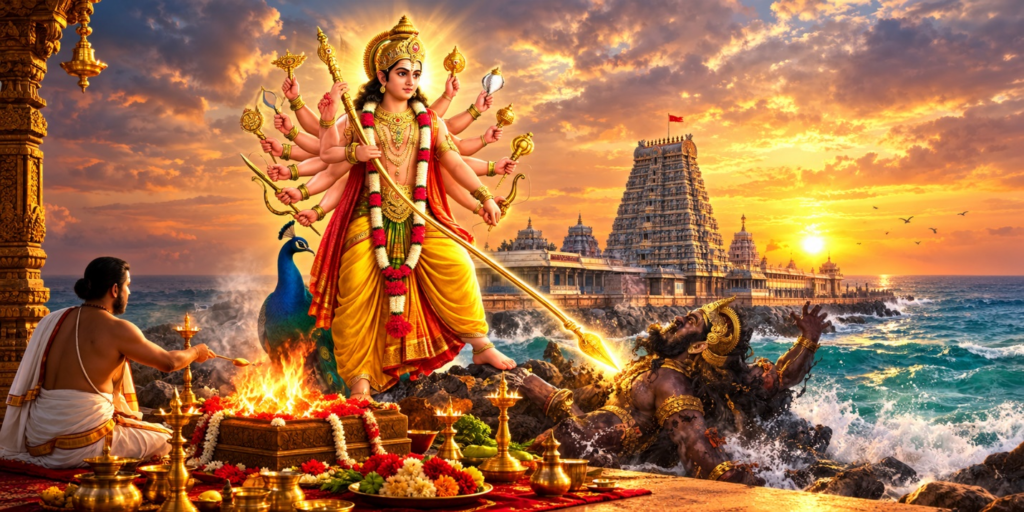
The idea of overcoming negative forces is also deeply connected with the story of Tiruchendur Murugan and Soorasamharam, which represents the victory of divine power over evil and the triumph of courage and righteousness. This symbolism is one reason why devotees associate traditional protection rituals with strength, courage and overcoming obstacles.
The deeper purpose of such practices is not simply to focus on conflict, but to seek divine support, develop inner courage and move forward with a calm and positive mind.
Devotees may also combine these practices with regular prayer, meditation and good conduct as part of their spiritual journey.
FAQs
They are traditional Hindu spiritual practices involving mantras, prayers, sacred fire and offerings, performed with the intention of seeking divine protection and strength.
Shatru Samhara Homam is traditionally performed to seek divine support in overcoming enemies, opposition and negative influences.
Vedic rituals are spiritual practices and should not be considered guaranteed solutions to every personal or practical problem. Devotees generally perform them with faith and sincere intention.
Yes. Sankalpam expresses the devotee's specific intention or prayer and is an important part of many traditional Vedic rituals.
Yes. Families can participate according to the tradition and guidance followed for the particular ritual.