
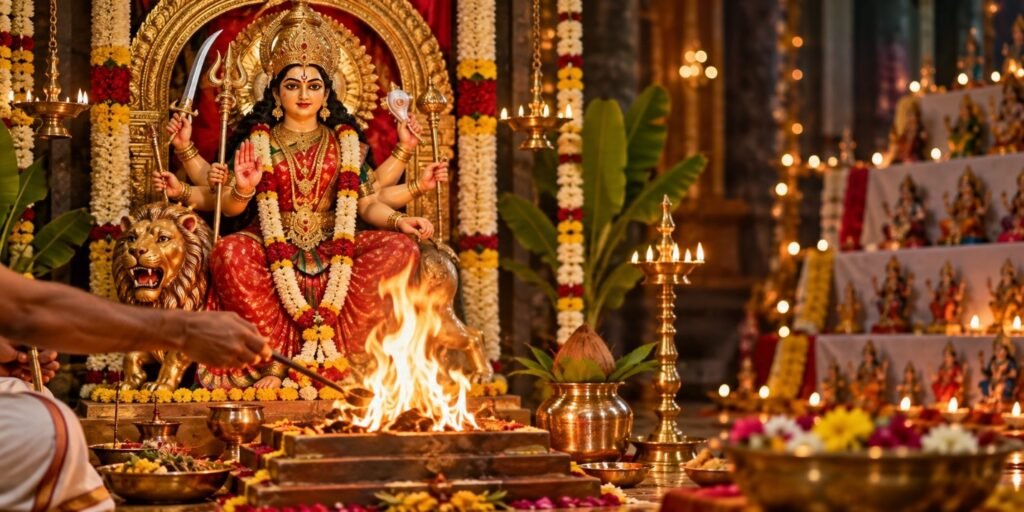
Navaratri is a sacred period dedicated to the worship of Goddess Shakti. Across different traditions, devotees observe these nine days with prayers, pooja, fasting, chanting, and other spiritual practices. Each form of Goddess Durga represents a different aspect of divine strength, protection, courage, and compassion. Among the various devotional practices, worship connected with Drishti Durga is traditionally associated with seeking protection from negative influences and the effects of drishti or the evil eye.
Fire worship holds a special place in Hindu tradition. During Navaratri, performing a sacred homam with sincere devotion can provide a meaningful setting for prayer and spiritual reflection. A Drishti Durga Homam is traditionally performed as an offering to Goddess Drishti Durga, with devotees seeking her grace, protection, and positive spiritual energy.
Understanding Goddess Drishti Durga
Goddess Durga is one of the most widely worshipped forms of Shakti. She is traditionally represented as a powerful divine mother who protects devotees and stands for courage and righteousness. The concept of Drishti Durga is connected with the traditional belief in drishti, often understood as the harmful effect of negative attention or the evil eye.
For devotees, worshipping Drishti Durga can be an expression of faith and a prayer for protection. Her fierce form represents the strength needed to overcome fear, negativity, and difficult circumstances, while her motherly aspect reflects compassion and divine care.
Why Navaratri Is Special for Goddess Worship
Navaratri is considered an important period for Shakti worship. Devotees use these days to spend more time in prayer, visit temples, perform pooja, and seek the blessings of Goddess Durga in her different forms.
The festival also provides an opportunity to focus on spiritual discipline. Lighting lamps, chanting traditional prayers, offering flowers, and participating in homam are some of the practices followed by devotees according to their family and regional traditions.
Performing a Drishti Durga Homam during Navaratri can therefore become a meaningful devotional practice for those who wish to dedicate their prayers to Goddess Drishti Durga.
Significance of Fire Worship During Navaratri
Fire, or Agni, has an important role in many Hindu rituals. In a homam, offerings are placed into the sacred fire while appropriate mantras are recited. The fire is traditionally regarded as a medium through which offerings are presented during the ritual.
The purpose of a homam is not simply the physical act of making offerings. It creates a structured spiritual environment where devotees can participate in prayer, meditation, chanting, and devotion.
A Drishti Durga Homam may include the preparation of the homa kundam, invocation of the deity, mantra chanting, traditional offerings, and concluding prayers. The exact procedure can differ depending on the sampradaya, priest, family tradition, and purpose of the ceremony.
Traditional Benefits Associated With Drishti Durga Worship
Devotional traditions associate Goddess Drishti Durga with protection and spiritual strength. Some devotees perform this worship with intentions such as:
- Seeking protection from negative influences
- Praying for peace and positive energy
- Developing courage during challenging situations
- Seeking divine grace for family and home
- Strengthening devotion towards Goddess Durga
- Removing fear and encouraging inner confidence
These are traditional spiritual beliefs rather than guaranteed outcomes. The meaning of worship can vary from one family or community to another.
How a Navaratri Fire Worship Ceremony Is Performed
The procedure for a Drishti Durga Homam is generally guided by a knowledgeable priest. A typical ceremony may begin with cleansing and preparing the sacred space, followed by sankalpam based on the devotee’s intention.
The priest then invokes the required deities and establishes the sacred fire. Traditional mantras are recited, and prescribed materials are offered into the homa fire. The ceremony concludes with prayers and blessings.
The specific mantras, offerings, and sequence should be followed according to the relevant tradition rather than treating one procedure as universal.
Performing the Homam With Traditional Guidance
For a meaningful Navaratri worship experience, it is helpful to understand the ritual requirements in advance. The date, sankalpam, pooja materials, mantras, and procedure may vary according to the devotee’s family customs and the priest’s traditional practice.
Shastrigal provides traditional Homam and Pooja services for devotees who wish to perform sacred rituals with appropriate priestly guidance and arrangements.
Whether performed for personal devotion, family prayer, or a special Navaratri observance, the focus of the ceremony remains sincere worship and faith.
Bringing Devotion Into Navaratri
Navaratri is more than a festival of celebration. For many devotees, it is a period to slow down, pray, reflect, and reconnect with the divine feminine. Worshipping Goddess Drishti Durga through sacred fire rituals can become a meaningful part of this spiritual journey.
A Drishti Durga Homam performed during Navaratri allows devotees to express their prayers through traditional fire worship while seeking the divine grace of Goddess Drishti Durga. With sincere devotion, proper guidance, and respect for tradition, the ceremony can hold a special place in Navaratri worship.
FAQs
Drishti Durga worship is traditionally associated with seeking Goddess Durga's protection from drishti or negative influences and praying for spiritual strength.
Yes. Devotees may choose to perform the homam during Navaratri according to their family tradition and guidance from a knowledgeable priest.
Agni has a central role in many Hindu rituals and is traditionally regarded as the medium through which offerings are made during a homam.
The ceremony can be arranged with the guidance of a qualified priest who can explain the appropriate procedure, materials, and mantras according to the tradition followed.
Protection is one traditional aspect, but devotees may also approach the Goddess seeking courage, peace, spiritual strength, and divine grace.