
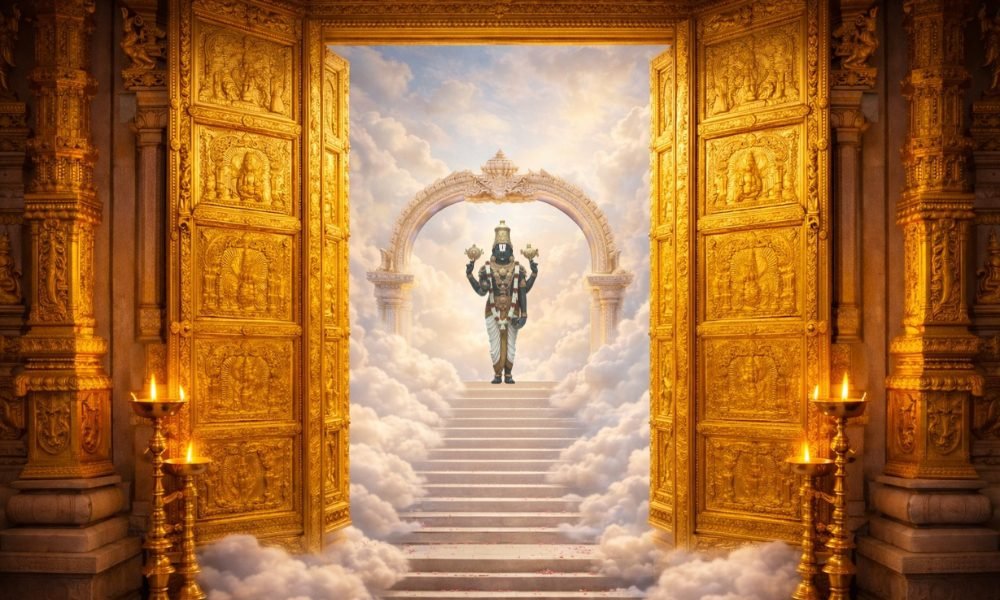
If you’ve ever been to a major Vishnu temple during Vaikunta Ekadasi, you know the feeling. The crowds, the smell of fresh Tulsi, and that electric anticipation as people wait to walk through the Vaikunta Dwaram. But let’s be honest—sometimes the crowds are too much, or you just want a deeper, more private connection with the Divine.
That’s where the Purusha Suktam Mantra Japam comes in. It’s like having a private key to that celestial gate, right in your own living room.
What’s the Big Deal About the Purusha Suktam?
I used to think of the Purusha Suktam as just another long Sanskrit chant. But when you look closer, it’s actually a cosmic “map.” It comes from the Rig Veda and basically says: “Look around. Everything you see—the trees, the sky, even the person you don’t like—is part of one giant Divine Body.”
Reciting this on Vaikunta Ekadasi isn’t just a tradition; it’s a perspective shift. You stop feeling like a small person with big problems and start feeling like a part of something infinite.
Setting Up Your Space (Keep it Simple)
You don’t need a gold-plated altar to make this work. Here’s how I usually set things up at home:
- The Morning Vibe: Try to get up while the world is still quiet (around 4:30 or 5:00 AM). There’s a stillness then that makes chanting feel much more powerful.
- The Anchor: Light a simple ghee lamp. Fire has a way of grounding our wandering minds.
- The “Why”: Before you say a single word, sit for a minute. Why are you doing this? Maybe it’s for clarity in your career, or maybe you just need a mental “reset.” This is your Sankalpam. Don’t skip it—it’s the “address” on your prayer’s envelope.
How to Actually Do the Japam
If the Sanskrit feels intimidating, don’t worry. The Lord cares more about your Bhava (your inner feeling) than your perfect grammar.
- Follow Along: There are some beautiful, slow-paced recitations on YouTube. Play one softly and follow along with a printed text.
- The Power of 11: Chanting the Suktam 11 times is a traditional sweet spot. It takes about an hour, which is just long enough for your brain to finally stop worrying about your “to-do” list.
- The Tulsi Connection: If you have a Tulsi plant, keep a few leaves nearby. Offering a leaf at the end of each chant is a tactile way to stay present.
What Really Changes? (The Benefits)
We often talk about “spiritual benefits” in vague terms, but the shifts I’ve noticed from this practice are very real:
- Emotional Armor: Life throws a lot at us. Chanting these ancient frequencies seems to build a sort of “buffer” around your mind. Things that used to annoy you suddenly don’t seem like such a big deal.
- The “Ekadasi Glow”: Combined with the traditional fast, this Japam acts as a detox for both the body and the ego. You finish the day feeling lighter—literally and figuratively.
- A Sense of Home: Vaikunta is often described as a place, but really, it’s a state of being where there is no “Kunta” (anxiety). The Suktam helps you find that space inside yourself.
A Few Real-World Tips
- Don’t Starve Yourself: If a full water-only fast makes you irritable, it defeats the purpose of the Japam. Eat some fruit or yogurt. A peaceful mind is better than a miserable, hungry one.
- Involve the Family: Even if they don’t chant, just having the sound of the Suktam playing in the house changes the atmosphere. It’s like a spiritual air purifier.
The Silence at the End: This is the most important part. After your 11th chant, don’t just jump up and check your phone. Sit in the silence for five minutes. That’s when the “download” actually happens.
Wrapping Up
Vaikunta Ekadasi is a rare opportunity to pause the “noise” of life. Whether you spend ten minutes or two hours on the Purusha Suktam, just give it your full heart. You might find that the gates of Vaikunta were never really closed—we just needed to quiet down enough to hear them opening.
Frequently Asked Questions (FAQ)
The Purusha Suktam reveals the universe as a single Cosmic Being, proving all life is interconnected. Chanting it invokes divine omnipresence, aligning your personal energy with the rhythm of creation.
Vaikunta Ekadasi is considered the most sacred of all 24 Ekadasis. Its significance lies in the belief that the Vaikunta Dwaram (the gate to Lord Vishnu’s inner sanctum) opens on this day, offering devotees a direct path to liberation.
Chanting the Purusha Suktam fosters a sense of universal unity, reducing ego and stress. Its rhythmic vibrations improve mental focus, offering clarity and a deeper connection to the divine whole.
On Vaikunta Ekadasi, the primary mantras chanted are "Om Namo Narayanaya" and "Om Namo Bhagavate Vasudevaya," alongside the recitation of the Vishnu Sahasranama (1000 names of Lord Vishnu).
The Purusha Suktam typically consists of 24 mantras in its most commonly recited version, though the original Rig Vedic text contains 16 mantras.